Quick facts
- Formed
- 1822, from Rowan County [america250.nc.gov]
- Created by
- The North Carolina Legislature, from what was Rowan County [co.davidson.nc.us]
- Named for
- Gen. William Lee Davidson, Revolutionary War officer killed February 1, 1781, at Cowan's Ford on the Catawba River while delaying Cornwallis's advance [america250.nc.gov]
- County seat
- Lexington [america250.nc.gov]
- County seat name origin
- Lexington is named for Lexington, Massachusetts, site of the opening battle of the American Revolution in 1775 [northcarolinahistory.org]
- Later boundary changes
- Parts of the county were annexed to Forsyth County in 1889 and 1921 [america250.nc.gov]
- Area
- 567.70 sq mi total, 553.18 sq mi land, 14.52 sq mi water (U.S. Census Bureau figures as reported by Wikipedia; the county's own FY2026 budget summary cites 549 sq mi) [en.wikipedia.org]
- Population (2020 census)
- 168,930 [census.gov]
- Municipalities
- Denton, Lexington, Midway, Thomasville and Wallburg (plus a portion of High Point) [co.davidson.nc.us]
- Lexington nickname
- "Barbecue Capital of the World" [en.wikipedia.org]
- Thomasville nickname
- "Chair City", after its furniture industry and the Big Chair monument [en.wikipedia.org]
- Denton historic nickname
- "Cross Tie Capital of the Country" (peak of B. I. Harrison's cross-tie business, 1917-1918) [townofdenton.com]
- First Native people
- The Saponi were the first Native people of the Yadkin Valley and present-day Davidson County [northcarolinahistory.org]
How did Davidson County get its name?
Davidson County was created from Rowan County in 1822 and named for Gen. William Lee Davidson, a North Carolina officer in the American Revolution. Davidson was killed on February 1, 1781, at Cowan's Ford on the Catawba River while trying to slow Lord Cornwallis's advance toward Guilford Courthouse. Lexington became the county seat.
Davidson was born in Lancaster County, Pennsylvania, to Irish immigrant parents, and his family later moved to the North Carolina piedmont. An earlier Davidson County, created by North Carolina in the 1780s for the same general, became Davidson County, Tennessee, so the two are separate places.
The county seat's name also looks back to the Revolution: Lexington is named for Lexington, Massachusetts, where the war's first shots were fired in 1775. Parts of Davidson County were later annexed to Forsyth County in 1889 and 1921.
Sources: america250.nc.gov · northcarolinahistory.org · co.davidson.nc.us
Who were the first people and settlers in Davidson County?
The Saponi were the first Native people of the Yadkin Valley and present-day Davidson County, and they had left the area by the mid-1700s. European settlers of German, Scots-Irish and English descent then arrived along the Yadkin River, many traveling south from Pennsylvania on the Great Wagon Road through Virginia's Shenandoah Valley.
Settlement patterns split roughly north and south: German Lutheran and Moravian communities clustered in the northern part of the county, while Scots-Irish and English hamlets formed to the south. The Scots-Irish and German migrants who filled the North Carolina backcountry came almost entirely from Pennsylvania down the Great Wagon Road.
These farming communities stayed small into the early 1800s. The land along the Yadkin was part of Rowan County until Davidson County was formed in 1822.
Sources: northcarolinahistory.org · ncpedia.org
Did Daniel Boone live in Davidson County?
Daniel Boone's family moved to the Yadkin Valley in 1750, and local legend says they spent their first year in or near the cave at today's Boone's Cave Park near Lexington. Historians have not found verified evidence that the Boones lived in the cave, and Daniel Boone's documented homestead was across the Yadkin in what is now Davie County.
The Daniel Boone Memorial Association dedicated an arrowhead monument at the cave on April 30, 1910, and the Daughters of the American Revolution added a 1913 plaque marking "Daniel Boone's Trail from North Carolina to Kentucky, 1769." When no evidence of Boone's residence was found in the 1960s, the site lost its state historic site designation. The state kept it as a park from 1971 to 2002, and Davidson County took over operations in 2003.
Today Boone's Cave Park is on the North Carolina Daniel Boone Heritage Trail, with walking trails, picnic areas, primitive camping and canoe access to the Yadkin River.
Sources: docsouth.unc.edu · ncdanielboonetrail.org · ncdanielboonetrail.org
What role did the Revolution and the Yadkin River crossings play?
In 1781 Gen. Nathanael Greene's American army crossed the Yadkin River at Trading Ford and passed through what is now Davidson County while retreating ahead of Lord Cornwallis, a maneuver that set up the Battle of Guilford Courthouse. A marker on the Lexington square, dedicated in 1919, honors Greene and Daniel Boone.
The county's namesake, Gen. William Lee Davidson, died in the same campaign at Cowan's Ford on February 1, 1781, while trying to slow Cornwallis's crossing of the Catawba River.
The Davidson County Historical Museum's history of the Lexington square records that the state Historical Commission and county commissioners honored Boone and Greene in 1919.
Sources: davidsoncountyhistoricalmuseum.com · america250.nc.gov
Was the first silver mine in the United States in Davidson County?
Yes. Silver was found near Lexington in 1838, and the Washington Mine opened there on January 7, 1839, as the first silver mine in the United States. It was later reopened as the Silver Hill Mine, supplied lead to the Confederacy during the Civil War and closed for good in 1882.
Prospector Roswell A. King bought the land and, with John W. Thomas, received a charter from the General Assembly in 1839. Losses in refining forced the Washington Mining Company to close the mine in 1852. A New York firm reopened it in 1854 as the Silver Hill Mine and owned the surrounding town; by the late 1850s, rented enslaved laborers had increasingly replaced white wage workers.
The mine ran again after the war but stopped in 1882 because of continuing refining problems and title disputes. A short-lived gold rush in the 1830s had also drawn miners to the county.
Sources: dncr.nc.gov · northcarolinahistory.org
How did the railroad shape Thomasville and Lexington?
The North Carolina Railroad, which ran from Goldsboro to Charlotte, crossed Davidson County in the 1850s. State legislator John W. Thomas led the fight for the line, laid out Thomasville on its route in 1852, and saw the first train pass through on January 20, 1856. Rail access later helped Lexington and Thomasville become textile and furniture centers.
Thomas lobbied for the track to run three miles north of his home, bought property along the route, and built a depot, general store and gristmill, so the community was first known as Thomas Depot. A post office opened in 1853 and the General Assembly incorporated Thomasville in 1857. His North Carolina highway historical marker (K-35) calls him the "Founder of Thomasville."
Railroads also built smaller towns: the line that reached Denton in 1906 later became the High Point, Thomasville and Denton Railroad.
Sources: dncr.nc.gov · historynet.com · northcarolinahistory.org · townofdenton.com
What happened in Davidson County during the Civil War?
Davidson County saw no major battles, but it supported the Confederate war effort. The Silver Hill Mine produced lead, a Thomasville firm made boots for the army, and in March 1865 Thomasville became a hospital depot for wounded from Averasboro and Bentonville. Later that year the Lexington courthouse interior burned while Union troops occupied the area.
Thomasville had just over 300 residents when the war began. Shelly Brothers & Company supplied boots to the Confederate Army, and Gov. Zebulon Vance exempted its 24 male workers from conscription. In 1865, wounded Confederates and some Federal prisoners arrived by train and were treated in a tobacco warehouse and several churches; 34 patients died and were buried in a common plot in the town cemetery.
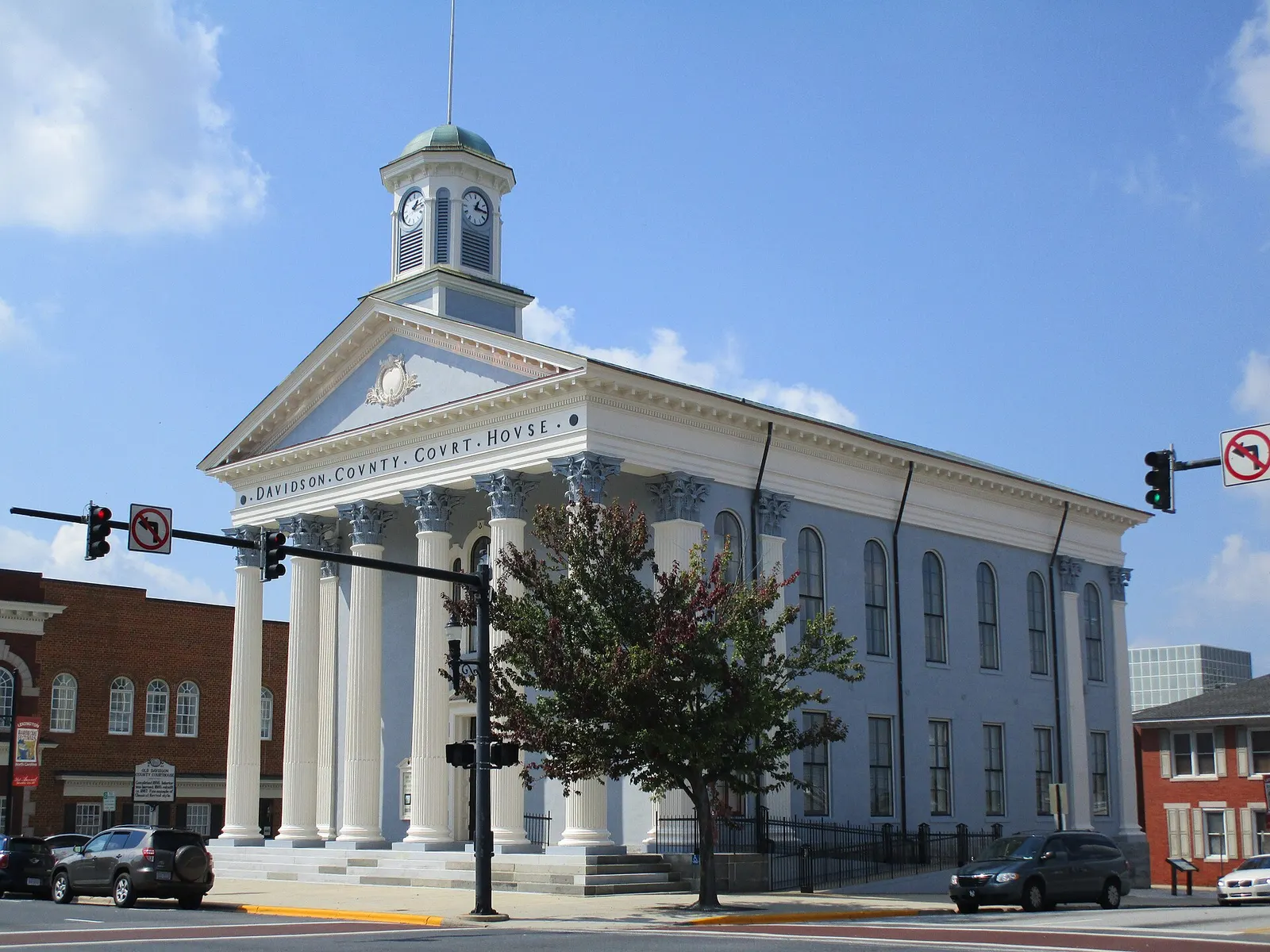
In Lexington, the 1858 courthouse interior burned in 1865 under suspicious circumstances that locals blamed on occupying Union forces. A local citizen saved some records, and officials repaired the building after 1868 using the surviving walls and columns.
Sources: historynet.com · dncr.nc.gov · dncr.nc.gov
Why is Thomasville called the Chair City?
Thomasville is called the Chair City because of its long furniture-making history and its Big Chair monument. The Thomasville Chair Company built the first giant chair in September 1922. After weather damaged it and it was scrapped in 1936, a concrete-and-steel "World's Largest Chair" was built downtown starting with a cornerstone laid January 9, 1951.
The original chair used enough material to make 100 ordinary chairs. A local chamber of commerce formed in 1948 and revived interest in replacing it; the new sculpture took six months to build, was made by a Winston-Salem company and was painted to look like furniture. It was meant to honor Thomasville's role in the furniture industry, where Thomasville Furniture was a major employer.
The Big Chair stands in downtown Thomasville near the 1870-71 railroad depot, which now serves as the town's visitor center.
Sources: dncr.nc.gov · historynet.com · en.wikipedia.org
What role did textile mills play in Davidson County?
Textiles and furniture became the county's main industries after railroads arrived. The best-documented example is Erlanger Mills, which New York textile owners built north of Lexington starting in 1913 to supply cotton fabric for their Baltimore underwear factory. It began production on March 28, 1914, with a planned mill village around it.
By the 1920s the Erlanger village had 325 houses, two churches, schools, a hotel, hospital, clubhouse, company store and dairy. Executives sold the houses to employees in the 1950s after the area was annexed by Lexington, and the Erlanger family sold the mill to Parkdale Mills of Gastonia in 1972. The Erlanger Mill Village was listed on the National Register of Historic Places in 2008.
Textile and furniture manufacturing remained central to Lexington's economy through most of the 20th century, until the late 1990s, when most manufacturers moved production to Asia and Mexico.
Sources: dncr.nc.gov · northcarolinahistory.org · en.wikipedia.org
How did Lexington become known for barbecue?
Lexington's barbecue tradition dates to 1919, when Sid Weaver opened the town's first barbecue restaurant in a tent in the middle of town, and Jesse Swicegood opened a stand soon after. They trained other cooks, including Warner Stamey. The Lexington Barbecue Festival began on October 27, 1984, and the city calls itself the Barbecue Capital of the World.
The festival grew out of an idea that Joe Sink Jr., publisher of The Dispatch, raised with BB&T in 1983. About 30,000 people attended the first festival and ate 3,000 pounds of barbecue; attendance passed 100,000 in 1994 and reached an estimated 200,000 in 2014. The festival was canceled in 2020 and 2021 because of COVID-19 and returned in 2022.
The Davidson County Historical Museum notes that barbecue in Lexington first served crowds who came to town for court sessions on the square.
Sources: thebarbecuefestival.com · davidsoncountyhistoricalmuseum.com · en.wikipedia.org
When was High Rock Lake created?
High Rock Lake was created in 1927, when High Rock Dam on the Yadkin River was completed and workers closed its gates to flood the basin. The dam, about 101 feet high, was built to generate power for an aluminum smelter and was later owned by Alcoa. Tuckertown Dam, downstream, followed in 1962.
High Rock is the northernmost of the Uwharrie Lakes and covers about 15,180 acres at full pool. Tuckertown was the last of three dams built downstream of High Rock; the others were Narrows Dam (1917) and Falls Dam (1919). Alcoa sold its four Yadkin River dams to Cube Hydro in February 2017.
The lake's creation turned farm roads such as Stokes Ferry Road into lake crossings and made creekside property into waterfront.
Sources: salisburypost.com · en.wikipedia.org
What is the history of the Lexington square and Old Courthouse?
Lexington's square is dated to 1824, when work is believed to have begun on the first county courthouse, completed in 1825. Its 1858 replacement, built by George Dudley and William Ashley, burned inside in 1865 and was rebuilt. It became the "Old Courthouse" in 1958, joined the National Register in 1971 and has housed the Davidson County Historical Museum since 1976.
County officials decided in 1856 that a larger courthouse was needed to protect court records. A contemporary called the finished building a "Temple of Justice," and its state highway historical marker (K-44) describes it as a fine example of Classical Revival style.
The square has gathered memorials over time, including a 1905 Confederate monument that the city moved to storage on October 15, 2020, and that was relocated to Valor Memorial Park in Denton in 2021.
Sources: dncr.nc.gov · davidsoncountyhistoricalmuseum.com
Timeline
- Before 1750The Saponi were the first Native people of the Yadkin Valley and present-day Davidson County; by the mid-18th century they had disappeared from the area. [source]
- 1750Squire Boone brought his family, including young Daniel Boone, to the Yadkin Valley; local legend holds they spent their first year near the site of present-day Boone's Cave Park. [source]
- 1781Gen. Nathanael Greene's American army crossed the Yadkin at Trading Ford and passed through the area while delaying Cornwallis before Guilford Courthouse. [source]
- 1781Gen. William Lee Davidson, the county's namesake, was killed on February 1 at Cowan's Ford on the Catawba River. [source]
- 1822The General Assembly created Davidson County from Rowan County. [source]
- 1825The first Davidson County courthouse, a two-story brick building designed by architect William Nichols, was completed in Lexington. [source]
- 1830sA short-lived gold rush drew miners to the county, who also mined silver and copper. [source]
- 1839The Washington Mine near Lexington, where silver was found in 1838, opened on January 7, 1839, as the first silver mine in the United States. [source]
- 1852State legislator John W. Thomas founded Thomasville on the planned route of the North Carolina Railroad. [source]
- 1856The first North Carolina Railroad train passed through Thomasville on January 20, 1856, after the line was completed to the town in 1855. [source]
- 1857The General Assembly incorporated the town of Thomasville. [source]
- 1858Raleigh builders George Dudley and William Ashley completed the second Davidson County courthouse, now the Old Courthouse on the Lexington square. [source]
- 1861-1865During the Civil War, the Silver Hill mine produced lead for the Confederate war effort. [source]
- 1865After the battles of Averasboro and Bentonville in March 1865, Thomasville became a hospital depot, with wounded treated in a tobacco warehouse and several churches. [source]
- 1865The courthouse interior burned under suspicious circumstances that locals blamed on occupying Union forces; it was repaired after 1868. [source]
- 1907The General Assembly incorporated the Town of Denton on March 11, with J. E. Varner as first mayor. [source]
- 1910The Daniel Boone Memorial Association dedicated an arrowhead monument at Boone's Cave on April 30. [source]
- 1914Erlanger Mills, built from 1913 on 250 acres north of Lexington with a model mill village, began production on March 28, 1914. [source]
- 1919Sid Weaver opened Lexington's first barbecue restaurant, a tent in the middle of town. [source]
- 1922Thomasville's first Big Chair was built in September 1922 from enough material to make 100 ordinary chairs. [source]
- 1927High Rock Dam on the Yadkin River was completed and its basin filled to form High Rock Lake; the dam initially powered an aluminum smelter and was later owned by Alcoa. [source]
- 1951The cornerstone of Thomasville's concrete-and-steel "World's Largest Chair" was laid downtown on January 9, replacing the wooden chair scrapped in 1936. [source]
- 1958A larger county courthouse was completed, and the 1858 building became the "Old Courthouse." [source]
- 1962Tuckertown Dam was completed downstream of High Rock, the last of the three dams built below High Rock Dam. [source]
- 1971The 1858 Old Davidson County Courthouse was listed on the National Register of Historic Places. [source]
- 1976The Davidson County Historical Museum was established in the Old Courthouse on the Lexington square. [source]
- 1984The first Lexington Barbecue Festival was held on October 27, drawing about 30,000 people who ate 3,000 pounds of barbecue. [source]
- 2003After the state operated Boone's Cave as a park from 1971 to 2002, Davidson County took over its operation. [source]
- 2004The Town of Wallburg was incorporated on June 29 through Senate Bill 1127. [source]
- 2006Midway was incorporated on June 29, becoming Davidson County's fifth and newest municipality. [source]
Towns and communities
Lexington
Lexington is the Davidson County seat and was named for the 1775 Battle of Lexington in Massachusetts. It was incorporated by the General Assembly in the late 1820s (NCpedia gives 1827; many sources, including the city's marker, give 1828). The city is known for Lexington-style barbecue and has hosted the Lexington Barbecue Festival since 1984. [source]
Thomasville
Thomasville was founded in 1852 by state legislator John W. Thomas on the route of the North Carolina Railroad and was incorporated by the General Assembly in 1857. It grew into a furniture-making center known as the Chair City, home of the Big Chair monument. It is the county's largest city, with 27,183 residents in the 2020 census. [source]
Denton
Denton was known as Finch's Cross Roads until a post office named Denton, after a Texas town, opened on July 12, 1878. The railroad reached it in 1906, and the General Assembly incorporated the Town of Denton on March 11, 1907. Around 1917-1918 it was called the "Cross Tie Capital of the Country." [source]
Midway
Midway takes its name from its location midway between Winston-Salem and Lexington. After a 2005 petition drive, it was incorporated on June 29, 2006, with Norman Wilkes as first mayor. It is Davidson County's fifth and newest municipality. [source]
Wallburg
Wallburg was incorporated on June 29, 2004, through Senate Bill 1127. It held its first town election in November 2005 and opened a new Town Hall in 2011. The town owns the George W. Wall House, which is on the National Register of Historic Places. [source]